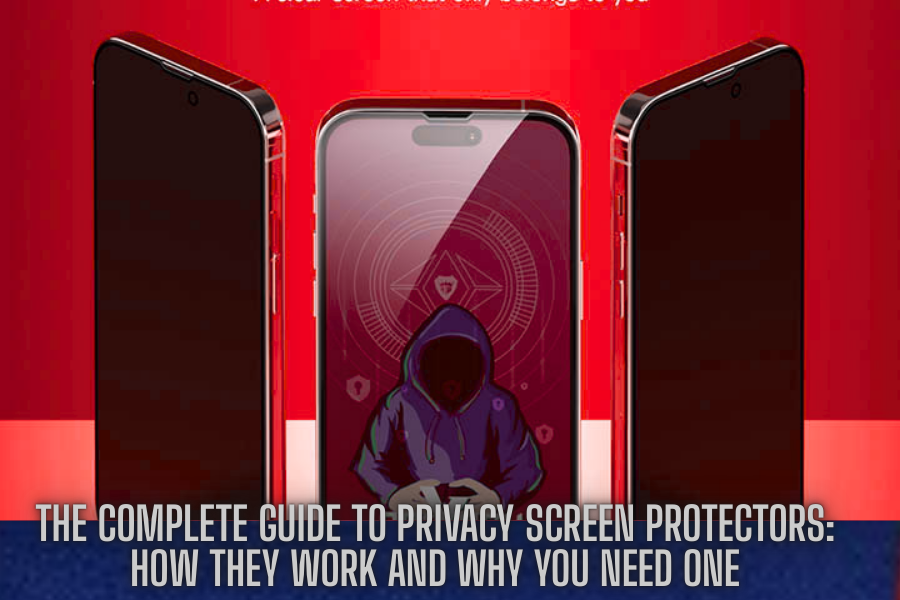
Digital security has become a major concern in today’s smartphone-driven world. We rely on our phones for banking, shopping, social media, email communication, work, and entertainment. Tools such as end-to-end encryption, two-factor authentication, strong passwords, and a reliable VPN help protect your online privacy. But there’s one very common threat that digital protection can’t stop: people around you physically looking at your screen.
This type of “visual hacking”—where someone sneaks a peek at your phone—has become a genuine privacy problem. Whether you’re commuting on a crowded bus, waiting at a public place, or working on confidential information, your screen is often exposed.
This is where a privacy screen protector becomes an essential accessory.
This guide covers everything you need to know: what privacy screen protectors are, how they work, whether you need one, the best brands, key buying factors, and their advantages and disadvantages.
What Is a Privacy Screen Protector?
A privacy screen protector is a smartphone accessory that protects both your display and your personal information. It looks similar to a regular screen protector—often made of PET film or tempered glass—but includes an additional anti-spy layer designed to limit the viewing angle of your screen.
The main technology used is micro-louver technology, which works similarly to window blinds. These microscopic vertical or horizontal louvers allow light to pass only when viewed directly from the front. From an angle, the screen appears dark or completely black.
Privacy protectors typically come in two types:
1. PET Film Privacy Protectors
- Thin and flexible
- Less expensive
- Easy to install
- Less durable than tempered glass
2. Tempered Glass Privacy Protectors
- Thick and strong
- Provides excellent scratch and drop protection
- Premium look and feel
- Can be more challenging to install, especially on curved screens
Some privacy screen protectors also include:
- Anti-glare coating
- Blue light filtration
- Anti-fingerprint (oleophobic) coating
- Anti-microbial layer
How Does a Privacy Screen Protector Work?
The secret lies in the micro-louver layer embedded in the protector.
Imagine millions of tiny blinds stacked together. When you look at your phone directly, these louvers align to allow light to pass through. However, when the phone is viewed from an angle—typically beyond 60° or 90°—the louvers block light, creating a dark or distorted appearance.
Two viewing angles exist:
1. Two-Way Privacy
Works only in portrait mode.
Landscape mode becomes visible to others—useful for sharing videos or photos.
2. Four-Way Privacy
Works in both portrait and landscape modes.
Ideal for maximum privacy but makes sharing more difficult.
Darkened-glass variations also exist, reducing screen brightness, but these offer weaker privacy than louver-based versions.
Do You Really Need a Privacy Screen Protector?
Many people underestimate how often others glance at their screens. Whether intentionally or unintentionally, visual hacking happens everywhere.
You may need a privacy screen protector if:
✔ You frequently use your phone in public
✔ You work with sensitive data
✔ You travel often
✔ You want to keep personal browsing private
✔ You dislike others noticing what you watch or type
✔ You want to avoid bright screen glare disturbing people around you
Modern phones have large, bright, high-resolution displays that are easy to see from multiple angles. This makes them vulnerable to peepers on trains, buses, planes, offices, cafés, classrooms, and even at home if someone sits next to you.
And it’s not just about malicious intent. Sometimes you simply don’t want people reading your messages or seeing what apps you’re using.
The Best Privacy Screen Protectors to Buy
Here are some of the top brands offering high-quality privacy protectors:
1. ZAGG
ZAGG is known for premium-quality accessories. Their privacy screen protector features:
- Four-way privacy filter
- Strong impact protection
- Anti-microbial coating
- Smooth touch responsiveness
Downside: Available mainly for iPhones.
2. UniqueMe
An excellent choice for Android users.
Features include:
- Two-way privacy (56° viewing angle)
- Tempered glass options for flat screens
- Hybrid PET-glass protectors for curved displays
- Easy installation
Ideal for those who want good privacy without sacrificing screen clarity.
3. Magglass
Magglass provides durable, high-quality privacy screen protectors for both Android and iPhone.
Pros:
- Strong privacy
- Great scratch resistance
- Premium feel
Cons:
In-display fingerprint scanners may not work properly due to the privacy layer.
What to Look for When Buying a Privacy Screen Protector
Not all privacy protectors are equal. Here’s what to consider:
1. Micro-Louver Technology
The most effective privacy feature.
Avoid simple darkened films—they reduce brightness but offer weaker privacy.
2. Tempered Glass vs Film
- Tempered glass = best for protection
- Film = lighter, cheaper, easier for curved screens
3. Two-Way or Four-Way Privacy
Choose based on your needs:
- Two-way = better for sharing content
- Four-way = maximum security
4. Viewing Angle
Typical options:
- 60° (strong privacy but darker display)
- 90° (more visible display but less privacy)
Find a balance based on your usage.
5. Touch Sensitivity
Cheap protectors may reduce touch accuracy or responsiveness, especially on curved displays.
6. Compatibility
Fingerprint scanners, especially in-display ones, may not work with certain protectors.
Advantages of Privacy Screen Protectors
1. Enhanced Privacy
The biggest benefit—your screen becomes visible only to you.
2. Reduces Light Disturbance
If someone is sleeping next to you, your bright screen won’t bother them.
3. Protects Against Scratches and Drops
Just like regular screen protectors, privacy protectors offer:
- Scratch resistance
- Shatter protection
- Screen longevity
4. Extra Visual Comfort
Some models include:
- Anti-glare coating
- Blue light filter
- Oleophobic coating
This improves visibility and reduces eye strain.
5. Fingerprint and Smudge Resistance
Higher-end protectors stay cleaner and smoother.
Disadvantages of Privacy Screen Protectors
While beneficial, privacy protectors aren’t perfect.
1. Reduced Brightness
To maintain privacy, the screen may:
- Look dimmer
- Need higher brightness levels
- Drain battery faster
2. Limited Viewing Angle
You’ll need to face the screen directly; sideways glances at notifications become harder.
3. Difficult to Share Content
With four-way privacy protectors, showing someone a photo or video becomes challenging.
4. Less Effective in Some Scenarios
Even with a narrow viewing angle, someone standing behind or above you (like on a bus) can still peek.
5. Fingerprint Scanner Issues
Some privacy layers interfere with in-display fingerprint sensors.
Final Thoughts: Should You Get a Privacy Screen Protector?
If you value privacy and often use your phone in public, a privacy screen protector is a smart investment. It offers peace of mind by keeping your personal information safe from prying eyes while also adding physical protection to your device.
However, you must be willing to accept the trade-offs:
- Slightly dimmer screen
- Narrow viewing angle
- Possible fingerprint sensor issues
For many people, these compromises are worth it.
Whether you’re a frequent traveler, a professional who handles sensitive information, or just someone who prefers privacy, a quality privacy screen protector can significantly enhance your digital and physical security.
If privacy matters to you, this accessory is not just optional—it’s essential.