


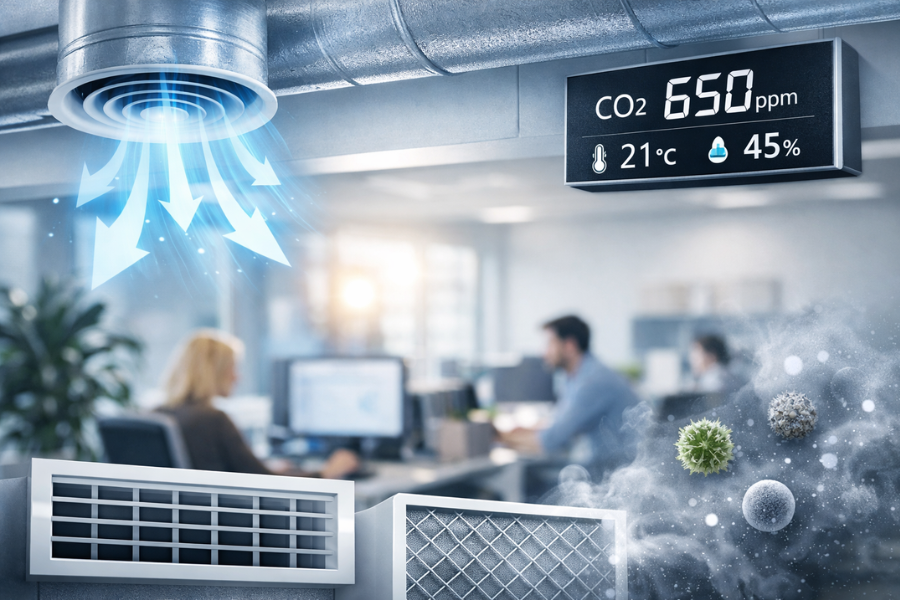
If you have ever walked into a room and instantly felt fresh, comfortable air, you’ve experienced the effect of a good luftanlegg — even if you didn’t notice it at the time.
A luftanlegg is simply a ventilation system designed to control airflow, temperature, and air quality inside a building. But in countries like Norway, where we spend close to 90% of our time indoors, it becomes much more than just a technical installation hidden in the ceiling. It becomes part of our everyday health.
I used to think ventilation systems were only important in factories or large commercial buildings. But once I started learning more about indoor air quality, I realized how deeply it affects concentration, mood, sleep, and even productivity at work.
Let’s talk about why a luftanlegg matters — and why it deserves more attention than it usually gets.
Why Indoor Air Is More Important Than Outdoor Air
Many people worry about pollution outside. Traffic, dust, smoke — all visible and easy to blame.
But here’s the surprising part: indoor air can often be more polluted than outdoor air.
Think about everything happening inside a building. People breathing out CO₂. Cleaning products releasing chemicals. Furniture, carpets, paint, and glue slowly emitting small particles. Cooking smells. Moisture from showers. Even electronics give off heat.
Without proper ventilation, all of this builds up.
A well-designed luftanlegg constantly replaces used air with fresh air while filtering out unwanted particles. It keeps the air moving. And movement is key. Stagnant air is uncomfortable air.
How a Luftanlegg Actually Works
It might sound technical, but the basic principle is simple.
A ventilation system pulls stale air out of the building and brings fresh air in. In modern systems, heat recovery units transfer warmth from the outgoing air to the incoming air. That means you get fresh air without losing too much heat during cold winters.
In Norway, that’s incredibly important. We insulate buildings very well to save energy. But when buildings become airtight, natural airflow decreases. Without a controlled luftanlegg, humidity and pollutants can get trapped inside.
And that’s when problems begin.
Health Effects of Poor Ventilation
You don’t need to see smoke to know something is wrong.
Have you ever felt sleepy in a meeting room? Or noticed headaches after spending hours in a stuffy office?
High CO₂ levels can make you tired and reduce concentration. Research has shown that when CO₂ levels rise above 1000 ppm in classrooms or offices, people report more symptoms like dry cough, blocked nose, and difficulty focusing.
Temperature plays a role too.
In winter, indoor temperatures should ideally stay below 22°C for office work. Even small increases above this can negatively affect performance. I’ve personally noticed that when an office feels slightly too warm, productivity drops. It’s subtle — but real.
In summer, increased air movement can help. A small fan or controlled airflow from a luftanlegg can make a room feel much more comfortable, even if the temperature doesn’t change much.
Comfort isn’t only about numbers on a thermostat. It’s about how the air feels.
Different Types of Luftanlegg
Not all ventilation systems are the same.
Some buildings use simple exhaust systems that remove air but rely on natural leaks for fresh air intake. These are basic and often not sufficient for modern, airtight buildings.
Balanced ventilation systems are more advanced. They supply and extract air at the same time, keeping pressure stable and air quality consistent.
In industrial environments, ventilation systems may be designed specifically to remove pollutants from processes like welding, baking, or chemical use. That’s a completely different level of airflow management.
Offices, schools, and kindergartens usually require systems designed for “non-polluting” activities — but even there, human presence alone creates significant air quality challenges.
Moisture: The Silent Problem
One issue people often underestimate is humidity.
Too much moisture indoors can lead to mold growth. And mold spores are not something you want circulating in the air you breathe every day.
I’ve seen homes with small ventilation problems that slowly turned into larger structural issues because moisture wasn’t properly removed. It starts with condensation on windows. Then a strange smell. Eventually, it becomes visible damage.
A good luftanlegg keeps humidity at healthy levels. Not too dry, not too damp. Balance is everything.
Productivity and Performance
Here’s something interesting: better air equals better work.
Studies have shown that improved ventilation can increase work speed and reduce errors. It makes sense. If your brain gets enough oxygen and you’re not distracted by discomfort, you perform better.
In classrooms, proper ventilation is linked to improved learning outcomes. Children are especially sensitive to poor air quality.
We often invest in better computers, better chairs, better lighting. But the invisible air around us might be just as important — if not more.
Energy Efficiency and Modern Buildings
Some people worry that running a ventilation system constantly will increase energy costs.
Modern luftanlegg systems are designed with energy efficiency in mind. Heat recovery technology ensures that warm air leaving the building transfers its heat to incoming fresh air.
This reduces heating needs while maintaining air quality.
Ironically, not having proper ventilation can cost more in the long run. Moisture damage, health complaints, decreased productivity — these hidden costs are far greater than electricity consumption.
Signs Your Ventilation Might Not Be Working Properly
You don’t need technical equipment to notice issues.
If rooms feel stuffy even after airing them out, that’s a warning sign.
If windows frequently have condensation in winter, humidity might be too high.
If employees or family members complain about headaches, dry eyes, or fatigue indoors but feel better outside, air quality could be the reason.
Ventilation systems also require maintenance. Filters must be replaced regularly. Ducts should be inspected. A neglected luftanlegg won’t perform as designed.
It’s a bit like owning a car. You can’t just drive it forever without servicing it.
Workplace Responsibility
In work environments, employers have a responsibility to ensure a safe indoor climate.
Ventilation must meet regulatory requirements. This includes proper airflow, temperature control, and acceptable pollutant levels.
If indoor air is not satisfactory, employees should raise the issue with management or safety representatives. In many countries, labor authorities can require corrective actions if standards are not met.
It’s not about complaining. It’s about health.
The Psychological Side of Air
Here’s something less discussed: perception.
If a room smells fresh, we feel more comfortable. If it smells stale, we instantly feel uneasy — even if pollutant levels are technically within limits.
Air quality is both physical and psychological.
A good luftanlegg doesn’t just meet regulations. It creates an environment where people feel good being present.
And that feeling matters.
Home Ventilation vs. Commercial Systems
Residential systems are usually smaller and simpler, but the principles remain the same.
In new homes, balanced ventilation with heat recovery is increasingly common. Older houses may rely more on natural ventilation and window airing.
But relying only on opening windows isn’t always enough, especially during cold winters or in noisy urban areas where windows remain closed.
At home, good ventilation improves sleep quality. Bedrooms with fresh airflow feel noticeably better in the morning.
I’ve experienced the difference personally — waking up in a well-ventilated room feels completely different from waking up in a closed, stale space.
Investing in Air Is Investing in Life
It might sound dramatic, but it’s true.
We can survive days without food. We can survive hours without water. But without air, we last only minutes.
Yet we rarely think about the quality of the air we breathe indoors every day.
A properly designed and maintained luftanlegg isn’t just a technical solution. It’s part of a healthy building.
When indoor air is clean, temperature balanced, and humidity controlled, everything works better. People think more clearly. Buildings last longer. Energy is used more efficiently.
And life simply feels better.
Final Thoughts
A luftanlegg may not be visible. It doesn’t have the visual impact of modern architecture or stylish furniture. It hides above ceilings and inside walls.
But its impact is constant.
In homes, schools, offices, and industrial buildings, ventilation quietly shapes our daily experience.
If you’ve never thought much about it before, maybe now is the time.
Next time you enter a room and it feels fresh and comfortable, take a second to appreciate what’s working behind the scenes. Because good air doesn’t happen by accident.
It happens by design.