


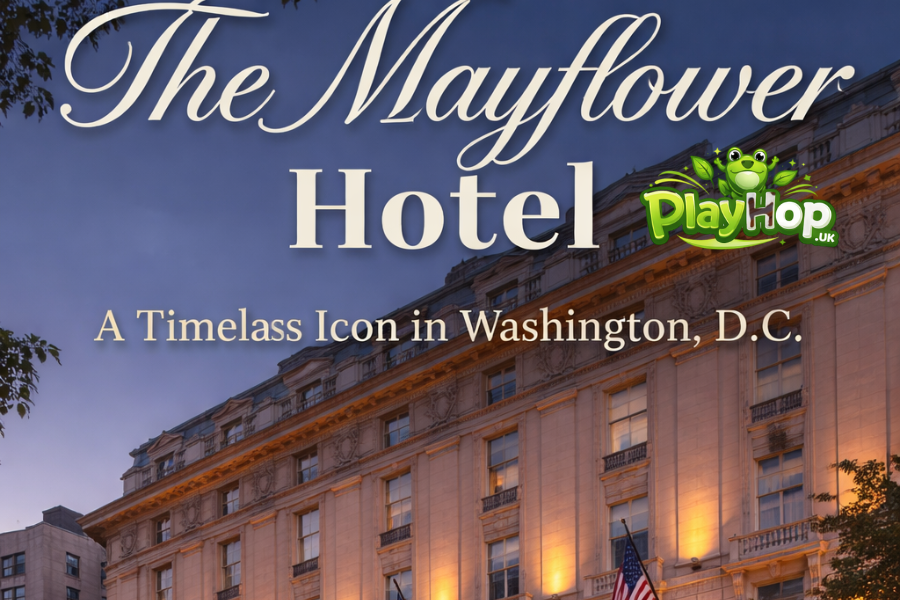
If you ever find yourself walking along Connecticut Avenue in downtown Washington, D.C., there’s a good chance you’ll pass a grand, elegant building that seems to whisper stories from another era. That’s the Mayflower Hotel — often lovingly called the “Grande Dame of Washington.” And trust me, that nickname isn’t just for show.
The Mayflower Hotel isn’t just another luxury stay in the capital. It’s a place layered with history, politics, glamour, and old-school charm. When people search for “mayfloor,” they often mean the Mayflower — and once you discover what makes this hotel special, you’ll understand why it continues to capture attention more than a century after opening its doors.
Let’s take a closer look at what makes this historic landmark such a big deal.
A Grand Beginning in 1925
The The Mayflower Hotel officially opened on February 18, 1925. Imagine Washington in the roaring twenties — jazz music in the air, political conversations happening over cigars and coffee, and the city expanding into a modern capital. Into that atmosphere stepped this Beaux-Arts masterpiece.
Designed by architects Warren & Wetmore and Robert F. Beresford, the building was created with elegance in mind. High ceilings, ornate detailing, and a sense of grandeur that was meant to impress — and it still does.
Even today, when you walk into the lobby, there’s this unmistakable feeling that you’ve entered somewhere important. Not flashy. Not trendy. Just timeless.
Why It’s Called the “Hotel of Presidents”
One of the things that truly sets the Mayflower apart is its connection to American political history.
It earned the nickname “Hotel of Presidents” because so many U.S. presidents and political leaders have stayed there. Among them was Harry S. Truman, who was a frequent guest. In fact, he famously referred to the Mayflower as Washington’s “Second Best Address” — right after the White House. That’s quite a compliment.
Over the decades, the hotel has hosted inaugural balls, political gatherings, and historic meetings. When major events happen in Washington, chances are the Mayflower plays some role behind the scenes.
You can almost imagine powerful conversations taking place in its suites — decisions that shaped policies, elections, and history itself.
Location That Makes It Even More Special
The Mayflower sits at 1127 Connecticut Avenue NW, just two blocks north of Farragut Square. It’s also one block from the Farragut North Metro station, which makes it incredibly convenient for visitors.
Its downtown location places it right in the heart of Washington’s energy — close to business districts, embassies, museums, and government offices.
What I personally love about its location is that you can step outside and immediately feel the rhythm of the city. Yet, when you step back inside, everything slows down. The thick walls and classic interior somehow shield you from the rush outside.
Architectural Beauty That Still Shines
The hotel’s architectural style is Beaux-Arts, which means elegance and symmetry dominate the design. The grand ballroom, detailed ceilings, and sweeping staircases all reflect an era when buildings were crafted as works of art.
Unlike many modern hotels that focus heavily on sleek minimalism, the Mayflower embraces character. You’ll notice chandeliers that sparkle without being over-the-top and decor that feels sophisticated rather than trendy.
It’s one of those rare places where you can truly feel the past without it feeling outdated.
The Largest Luxury Hotel in D.C.
With 512 rooms and 69 suites — including two presidential suites — the Mayflower is the largest luxury hotel in Washington, D.C.
That’s impressive on its own. But what makes it more interesting is that it has been continuously operating longer than any other hotel in the Washington metropolitan area.
Think about that for a moment. Through the Great Depression, World War II, countless presidential administrations, economic ups and downs — the Mayflower never stopped welcoming guests.
There’s something admirable about that kind of resilience.
Rivalries and Prestige
In the world of historic Washington hotels, there’s always been friendly rivalry.
The Mayflower often stands shoulder to shoulder with the Willard InterContinental Washington and the Hay–Adams Hotel.
Each has its own legacy, but the Mayflower’s size and long-standing presence give it a unique edge. While the others may boast their own political and social history, the Mayflower’s scale and continuity make it feel almost like a permanent fixture of the capital.
It’s not just a hotel. It’s an institution.
Managed by a Modern Hospitality Giant
Today, the Mayflower is managed by Autograph Collection Hotels, which is part of Marriott International.
That means while the hotel preserves its historic charm, it also offers modern amenities and service standards expected by today’s travelers.
I think this balance is crucial. Some historic hotels feel like museums — beautiful but slightly uncomfortable. The Mayflower manages to stay comfortable and updated without losing its soul.
That’s not easy to pull off.
A Recognized Historic Landmark
The Mayflower was added to the U.S. National Register of Historic Places in 1983. It’s officially recognized as a historic site, which helps preserve its legacy for future generations.
It was also a charter member of Historic Hotels of America, a program under the National Trust for Historic Preservation.
This recognition isn’t just symbolic. It means the building’s architecture, cultural importance, and history are protected and valued.
And honestly, it deserves that status.
What It Feels Like to Stay There
Let’s move beyond facts and talk about experience.
When you stay at the Mayflower, you don’t feel like you’re in a generic hotel room. There’s a quiet sophistication in the decor. The hallways feel classic. The rooms combine traditional design with modern comfort.
The vibe is more refined than flashy.
If you’re someone who appreciates history, you’ll probably love imagining who might have walked the same hallways before you. Presidents? Diplomats? Celebrities? It’s all part of the charm.
Even if you’re not into politics, there’s something cool about staying somewhere with that kind of backstory.
Dining and Social Life
The Mayflower offers on-site dining, and over the years, its restaurant spaces have been gathering spots for Washington’s elite.
Hotels like this often serve as unofficial meeting rooms for the city. Deals are discussed over dinner. Journalists meet sources. Lobbyists talk strategy. Travelers unwind after long days.
The atmosphere tends to be polished but not intimidating.
You can dress up, enjoy a cocktail, and feel part of something bigger — even if you’re just visiting for a weekend.
Why the Mayflower Still Matters Today
In a world where new hotels pop up every year with rooftop bars and Instagram-ready decor, why does the Mayflower still matter?
Because authenticity matters.
You can’t manufacture 100 years of history. You can’t fake presidential visits or historic events. That depth comes from time, and the Mayflower has had plenty of it.
It represents continuity in a city that constantly changes with each administration.
And there’s something comforting about that.
Final Thoughts on the “Mayfloor” Legacy
If you searched for “mayfloor” and landed here, now you know the real story behind the name. The Mayflower Hotel isn’t just a place to sleep. It’s a living piece of Washington, D.C.’s history.
From its grand opening in 1925 to its modern-day management under Marriott, it has balanced heritage and hospitality in a way few hotels can.
Personally, I think places like this remind us that buildings aren’t just structures. They hold stories. They witness history. They shape experiences.
Whether you’re visiting Washington for politics, tourism, business, or simply curiosity, the Mayflower stands ready — just as it has for over a century.
And that kind of staying power? That’s something truly special.