


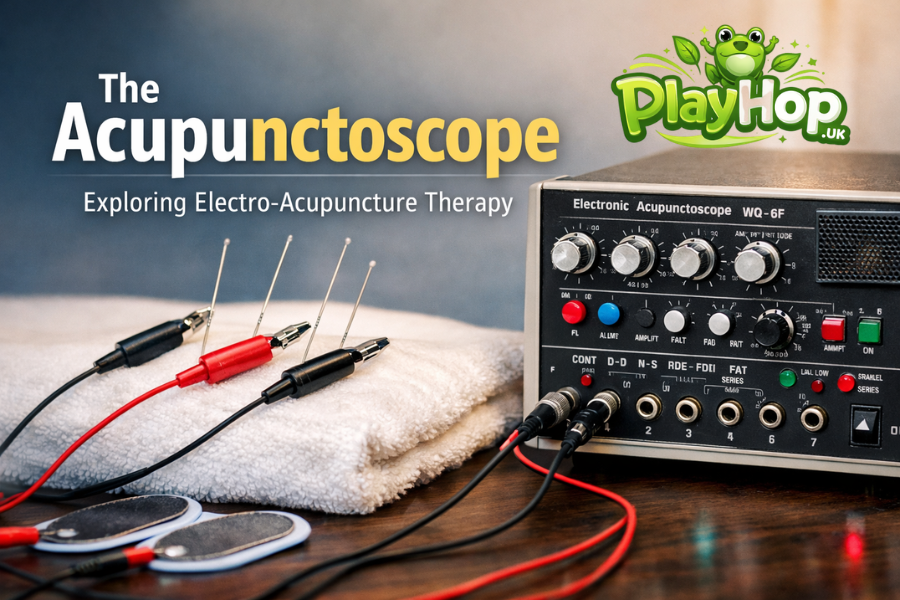
If you’ve ever stepped into a modern acupuncture clinic, you might have noticed a small electronic machine sitting beside the treatment table with wires connected to the needles. That device is often called an acupunctoscope.
The word might sound technical, but the idea behind it is surprisingly simple. An acupunctoscope is an electronic acupuncture unit designed to send gentle electrical pulses through acupuncture needles. These pulses stimulate specific points on the body in a controlled way. Many practitioners believe it enhances the therapeutic effect of traditional acupuncture.
Over the years, electro-acupuncture has grown in popularity, especially in clinics that combine traditional Chinese medicine with modern technology. Devices like the WQ-6F Electro Acupuncture Machine are part of this evolution. They bring precision, flexibility, and power to treatments that once relied only on manual needle manipulation.
Let’s break it down in simple terms and explore what makes an acupunctoscope so interesting.
The Basics of Electro-Acupuncture
Traditional acupuncture involves inserting thin needles into specific points on the body to stimulate energy flow, or what practitioners call “Qi.” In manual acupuncture, the therapist might gently twist or move the needles by hand.
Electro-acupuncture takes that idea a step further.
Instead of manually stimulating the needle, the acupunctoscope sends small electrical impulses through it. These impulses create rhythmic stimulation that can be adjusted in frequency, intensity, and pattern. Think of it as giving the needle a steady, consistent “massage” without the practitioner having to move it constantly.
In my opinion, this is where technology truly complements tradition. It doesn’t replace the skill of the acupuncturist. It simply gives them more control.
How an Acupunctoscope Works
An acupunctoscope is designed with multiple channels that connect to acupuncture needles using small clips. Once the needles are inserted into the patient’s body, the device delivers electrical pulses between pairs of needles.
The practitioner can adjust several things:
Waveforms
Different wave patterns produce different types of stimulation. Some are continuous and steady, while others rise and fall or alternate between dense and disperse pulses. These variations are believed to influence how the body responds.
For example, a continuous waveform might feel smooth and steady, while an intermittent waveform feels more rhythmic or pulsed.
Frequency
Frequency refers to how fast the electrical pulses are delivered. Lower frequencies tend to create slower, tapping-like sensations. Higher frequencies feel more buzzing or vibrating.
Modern acupunctoscopes allow both fixed and variable frequencies. This means the practitioner can either choose a steady rhythm or alternate between two different frequencies during treatment.
Amplitude
Amplitude controls the intensity of the stimulation. Most devices include high and low ranges, allowing practitioners to adjust the sensation according to the patient’s comfort level.
That flexibility is important. Every person has a different sensitivity level, and a skilled practitioner will gradually increase intensity until the patient feels a strong but comfortable sensation.
The WQ-6F: A Powerful Example of an Acupunctoscope
One of the well-known models in this category is the WQ-6F electro acupuncture machine. It’s considered a high-power unit and is part of the second-generation line of transistor electronic acupunctoscopes developed in China.
What makes this type of machine stand out is its multi-purpose design. It can be used not only for acupuncture therapy but also for acupuncture anesthesia, needleless therapy, and even physiological experiments.
The device has two independent sections, often labeled A and B. This means two different waveforms or frequencies can be used at the same time. In a busy clinic, that kind of flexibility can be incredibly useful.
Another feature that practitioners appreciate is the multiple output channels. With several sockets available, the machine allows both parallel and series connections. In simple terms, this means the stimulation can be distributed across different needle combinations depending on the treatment goal.
From a technical perspective, it’s quite advanced. But in practice, it’s all about providing controlled, stable stimulation.
Acupuncture Therapy and Anesthesia
One of the more fascinating applications of an acupunctoscope is acupuncture anesthesia.
Now, let me clarify something. This doesn’t mean replacing modern surgical anesthesia entirely. However, in some procedures and pain management settings, electro-acupuncture has been used to reduce pain perception significantly.
The idea is that electrical stimulation at certain frequencies can trigger the release of endorphins and other natural pain-relieving chemicals in the body.
In regular therapy sessions, electro-acupuncture is commonly used for:
Chronic back pain
Neck stiffness
Joint pain
Sciatica
Muscle spasms
Many patients report that the electrical pulses feel strange at first, but not painful. Most describe it as a mild tingling or tapping sensation.
Personally, I’ve heard people say they actually prefer electro-acupuncture over manual stimulation because it feels more consistent and less surprising.
Needleless Therapy: A Modern Twist
Here’s something interesting. Some acupunctoscopes support needleless therapy.
Instead of inserting needles, special electrodes with cotton pads soaked in saline solution are placed on the skin over acupuncture points. The electrical stimulation passes through the skin without penetrating it.
This approach is sometimes chosen for children, people who are afraid of needles, or in specific therapeutic cases.
It’s not exactly the same as traditional acupuncture, but it shows how adaptable the technology has become.
Understanding the Waveforms
If you look at an acupunctoscope manual, you’ll see waveform names like:
Continuous
Dense-Disperse
Intermittent
Rise-Fall
Inverse Sawtooth
At first glance, these terms can feel overwhelming. But they simply describe how the electrical signal behaves over time.
A dense-disperse pattern alternates between rapid pulses and slower pulses. This alternating stimulation is often used to prevent the body from adapting too quickly to one constant frequency.
The rise-fall waveform gradually increases and decreases intensity, which can feel more natural and wave-like.
These options give practitioners the ability to tailor treatments. And in my view, that customization is where electro-acupuncture shines.
Safety and Stability
Modern acupunctoscopes are built with safety in mind.
High stability, low power consumption, and non-interference between channels are all important features. This ensures that one channel doesn’t affect another and that the stimulation remains smooth and predictable.
Still, it’s important to remember that these devices should only be operated by trained professionals. Electrical stimulation, even at low levels, requires knowledge and experience.
If you’re considering electro-acupuncture, always choose a licensed and qualified practitioner.
Why Clinics Choose Acupunctoscopes
From a clinic’s perspective, an acupunctoscope offers several practical advantages.
First, it reduces physical strain on the practitioner. Instead of manually stimulating multiple needles for an extended period, the device handles the repetitive work.
Second, it ensures consistency. Electrical pulses do not get tired or distracted. They maintain the selected frequency and amplitude throughout the session.
Third, it adds versatility. With multiple channels and waveform combinations, one device can handle a wide range of treatment styles.
For busy practices, that’s a major benefit.
What Does It Feel Like for the Patient?
This is probably the most common question.
Most patients describe the sensation as:
Tingling
Pulsing
Light tapping
Mild vibration
It should not feel sharp or painful. If it does, the intensity can be adjusted immediately.
Many people actually find the rhythmic stimulation relaxing after the initial adjustment period. The steady pulses can create a calming, almost hypnotic effect.
And of course, comfort is always the priority.
Is an Acupunctoscope Better Than Traditional Acupuncture?
This is where opinions differ.
Some practitioners prefer the traditional, hands-on technique and believe manual needle manipulation creates a more intuitive connection with the patient.
Others appreciate the precision and consistency of electro-acupuncture devices.
Personally, I don’t see it as a competition. It’s more about having options. In some cases, manual acupuncture may be ideal. In others, especially chronic pain conditions, electrical stimulation might offer stronger or longer-lasting results.
The best approach often depends on the patient’s condition, comfort level, and the practitioner’s expertise.
The Future of Electro-Acupuncture
Technology continues to evolve, and devices like the acupunctoscope are becoming more refined and user-friendly.
As research into acupuncture and pain management grows, we may see even more integration between traditional techniques and electronic systems.
What I find fascinating is how ancient medical practices continue to adapt rather than disappear. The acupunctoscope is a perfect example of that blend between old wisdom and modern engineering.
It respects the principles of acupuncture while introducing greater control and flexibility.
Final Thoughts on the Acupunctoscope
An acupunctoscope is more than just a machine with wires and knobs. It represents a bridge between tradition and innovation.
Whether used for pain relief, muscle stimulation, anesthesia support, or needleless therapy, it offers a level of customization that manual methods alone may not provide.
At the same time, it still depends entirely on the skill of the practitioner. Technology enhances treatment, but it doesn’t replace experience, knowledge, or patient care.
If you’re curious about electro-acupuncture, talk to a qualified professional and ask questions. Understanding how the device works can make the experience far less intimidating.
In the end, the acupunctoscope is simply a tool. And like any good tool, its value lies in how thoughtfully it is used.
That’s what makes it such an interesting piece of modern therapeutic equipment.