

The NYT Connections puzzle has quickly become a favorite daily challenge for word lovers and casual players alike. Every day, 16 seemingly random words appear on the board, and your goal is to sort them into four groups of four based on hidden connections. It sounds simple, but some puzzles are tricky enough to make even seasoned solvers pause. That’s where today’s Connections hint comes in. With the right clues and a little guidance, you can spot patterns faster, enjoy those satisfying “aha!” moments, and tackle the puzzle with confidence, whether you’re a newbie or a veteran.
What Is the NYT Connections Puzzle?
Before we dive into the hints, let’s do a quick refresher. Connections is a daily word puzzle where you’re given 16 words. Your job? Sort them into 4 groups of 4 based on a shared theme. Sounds simple enough, right?
Here’s the catch: the words are often tricky. Some might belong in more than one potential category, and some groups are almost designed to make you overthink. The challenge—and the fun—lies in spotting patterns that aren’t immediately obvious.
Unlike Wordle, which relies heavily on guessing letters, Connections tests your ability to recognize relationships between words. Sometimes it’s obvious: all the words in a group might be fruits, or colors. Other times, the theme is abstract, like emotions, idioms, or even grammar quirks.
Why Hints Are Helpful
Some players love figuring out everything on their own, and that’s great! But there’s no harm in using hints, especially when the puzzle gets tricky.
Hints help by:
- Focusing your attention: They give you a starting point instead of staring blankly at 16 words.
- Encouraging pattern recognition: Once you solve one group, it often reveals patterns for the others.
- Boosting confidence: A little nudge can make the puzzle feel less intimidating.
Today, we’ll go over all the fresh hints for March 18, 2026, in a way that’s easy to understand, so you can solve the puzzle without feeling like you’re cheating.
Today’s Connections Hints, Explained
The game provides subtle clues for each group. Here’s how today’s puzzle hints break down, explained in simple language.
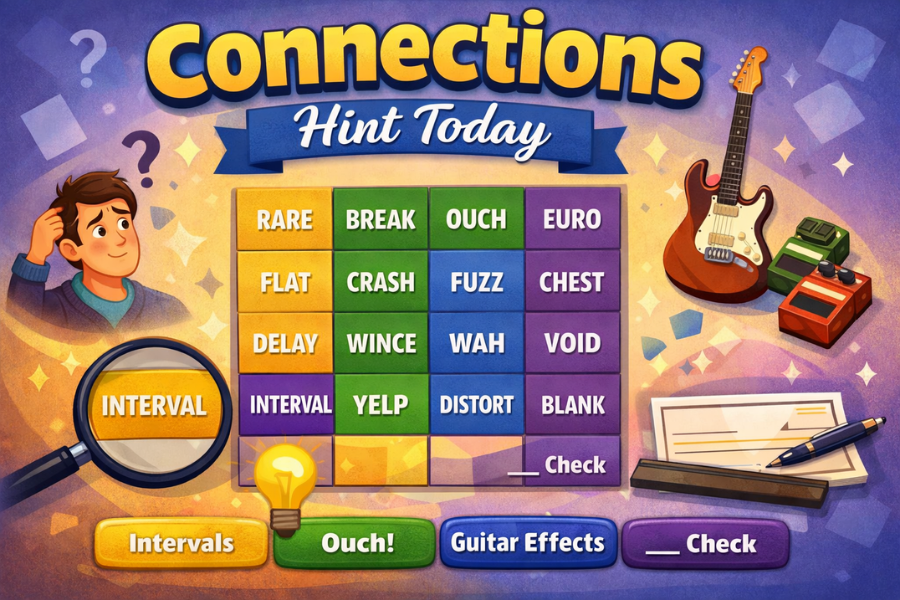
Yellow Group Hint: “Time between two things, maybe”
This one’s all about intervals. Think of situations where you measure or notice the gap between two events. For example, the time between a workout and your next meal, or the break between classes at school. Words that fall under this group are connected because they all relate to measuring or marking time in some way.
It’s one of the easiest groups to spot today because once you catch the pattern, the rest of the puzzle starts to feel manageable.
Green Group Hint: “That smarts!”
Ouch. This one is fun. The theme here is reactions to pain or discomfort. Imagine you stub your toe or get a paper cut—your instinctive reaction is exactly what this group is about.
This group might feel like it’s trying to trick you because some words could belong in other categories if you overthink them. But if you focus on the emotional response rather than the object itself, it clicks.
Blue Group Hint: “Rockers know these well”
Now this is a group for music lovers! These words are all connected to guitar effects pedals, the gadgets that musicians—especially rock guitarists—use to modify their sound.
Even if you’re not a musician, you might recognize terms like “distortion,” “delay,” or “chorus” from popular songs. The trick here is to think beyond just the literal meaning of words and imagine them in a musical context.
Purple Group Hint: “You might write one out to pay a bill”
This one’s deceptively simple. Think of ways people pay for things without using cash. The words in this group all relate to checks. Yes, the old-school paper kind. Today’s puzzle is throwing in a bit of everyday life to mix things up, and it’s satisfying when you finally make the connection.
Tips to Solve Connections Faster
Even if you use hints, there are some strategies that make solving any Connections puzzle much easier. Here are some tried-and-true methods:
1. Start With What’s Obvious
Always begin with the groups that jump out at you immediately. For today, that might be the yellow “interval” group or the purple “check” group. Once you get one group done, it automatically narrows your options for the rest.
2. Look for Unique Words
Some words only make sense in one context. Those are usually your starting points. For instance, if a word only belongs in the music group and nowhere else, it’s safe to put it there right away.
3. Test Word Combinations
Don’t be afraid to move words around. Sometimes seeing a word in a different group sparks the “aha!” moment. The beauty of Connections is that trial and error often leads to insight.
4. Think Abstractly
Not every group is literal. Some are about feelings, reactions, or categories that aren’t immediately tangible. Today’s “that smarts!” hint is a perfect example. You might have to think about how the word is used in daily life rather than what it literally is.
5. Don’t Overthink
Yes, some puzzles are tricky, but most can be solved by looking at the words naturally. If you find yourself over-analyzing, step back and ask: “What’s the simplest way these words could relate?” Often, that’s the correct answer.
Why Connections Is So Popular
I’ve noticed that people either love Connections or find it maddeningly addictive. Why?
- It’s quick but deep: You can play a puzzle in 5-10 minutes, but it still gives your brain a solid workout.
- It’s satisfying: When all the groups click, it’s one of those tiny victories that make your day better.
- It encourages thinking differently: Unlike standard crossword puzzles, you’re grouping concepts, not just finding letters.
Honestly, I’ve spent entire evenings doing the puzzle and sharing hints with friends. There’s something almost meditative about it—the way your brain shifts from looking at individual words to spotting patterns.
Final Thoughts
So, if you’re struggling with today’s Connections puzzle, remember this: hints are tools, not crutches. Use them to get a foothold, then trust your instincts. Today’s groups—intervals, reactions to pain, guitar effects pedals, and checks—are tricky but totally solvable once you think in the right direction.
The key is to stay relaxed, enjoy the challenge, and celebrate those “aha!” moments. After all, that’s what makes NYT Connections such a beloved daily puzzle.
Whether you’re a daily player or just trying it out for fun, these hints and strategies should help you crack today’s puzzle faster, feel smarter while doing it, and maybe even impress a friend or two along the way.
Remember, it’s not just about getting the answer—it’s about enjoying the process. So brew that coffee, grab your thinking cap, and dive into today’s Connections puzzle with confidence. You’ve got this!