


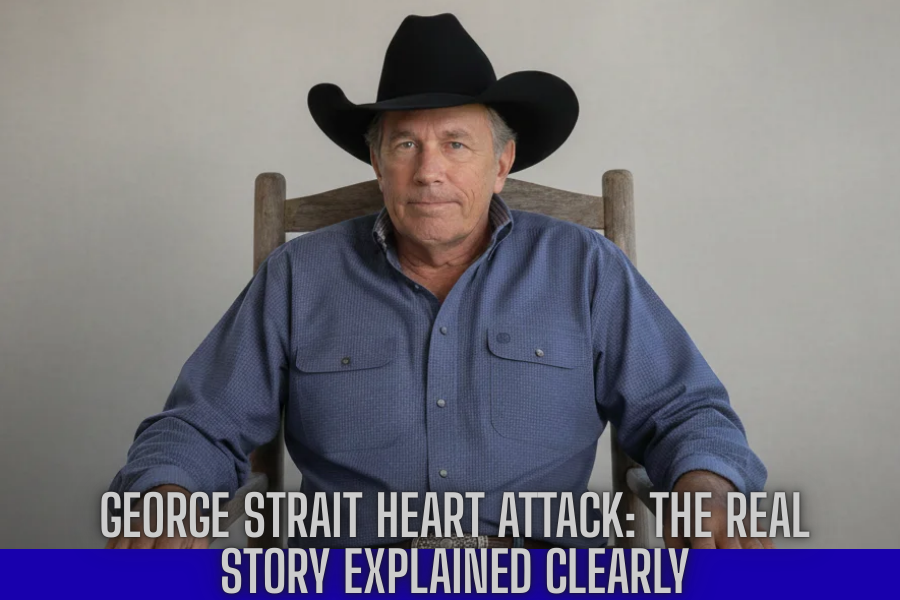
Searches for “George Strait heart attack” have increased after online posts and videos suggested the country music legend suffered a serious medical emergency. These claims have caused concern among fans, but they are not supported by verified information. No credible news outlet, medical report, or official statement has confirmed that George Strait experienced a heart attack (CNN, BBC).
This article examines where the rumor originated, what has actually been confirmed about George Strait’s health, and how social media misinformation can distort public perception. By separating facts from speculation, readers can understand the real situation clearly and accurately.
Why People Started Searching for “George Strait Heart Attack”
Celebrity health rumors almost always follow the same pattern, and George Strait’s case is no different.
It started with sensational social media posts. A few Facebook and YouTube accounts ran dramatic headlines suggesting he had been “rushed to the hospital” or was dealing with a “life-threatening condition.” These posts were vague on purpose. No dates. No hospitals. No doctors. No named sources. Just enough fear to make people click and share.
Once a few fans shared those posts, the algorithm did the rest.
Another factor was concert footage. Fans noticed George Strait sitting during parts of some performances or moving less than he used to decades ago. For someone who’s been on stage for over forty years, those changes felt noticeable. To some people, sitting down automatically translated to “something is wrong.”
In reality, nothing about those performances suggested an emergency. The shows continued normally. No interruptions. No ambulance. No follow-up announcements. But online, context often gets stripped away.
The Truth About George Strait’s Health
Here’s what has actually been confirmed, and it’s far less alarming than the rumors suggest.
George Strait has openly acknowledged long-term back discomfort, something that’s incredibly common for performers who spend decades traveling, standing under hot lights, and performing night after night. Back issues don’t make headlines, but they absolutely affect how someone moves on stage.
Sitting during parts of a show can simply be about pacing, comfort, and pain management. Many artists—young and old—do the same thing.
In 2025, George Strait also confirmed that he underwent wrist surgery. This wasn’t hidden or mysterious. He personally acknowledged it and reassured fans that his recovery was going well. The tone was calm, straightforward, and reassuring. Importantly, there was no mention of heart problems, cardiac treatment, or emergency hospitalization.
If a heart attack had occurred, it would not have stayed quiet. High-profile medical events involving artists of his stature are reported quickly and widely by credible outlets.
How Social Media Turns Small Details Into Big Scares
One of the hardest things about the modern internet is how easily concern turns into misinformation.
Social media platforms reward emotion over accuracy. A post saying “George Strait takes a seat during concert due to back discomfort” won’t spread very far. But a post hinting at a “secret health crisis” will explode across feeds in hours.
Some accounts specialize in this kind of content. They recycle the same dramatic language, swap in different celebrity names, and rely on the fact that most people won’t dig deeper before sharing.
Corrections don’t travel as fast as fear. By the time facts catch up, the rumor has already settled into search trends.
Sitting on Stage Doesn’t Mean a Medical Emergency
This detail deserves special attention because it caused a lot of unnecessary worry.
Seeing George Strait seated during a performance made some fans jump to worst-case conclusions. But sitting on stage is not a medical signal. It’s a practical choice.
Artists sit to manage back pain, knee strain, joint stiffness, or simple fatigue. Especially for someone in their seventies who’s still performing at a high level, adjusting posture is smart, not alarming.
What matters is what didn’t happen. There was no show cancellation mid-performance. No emergency response. No urgent announcement afterward. Those absences tell a much clearer story than a few seconds of video.
Aging, Longevity, and the Misunderstanding of Slowing Down
There’s an uncomfortable truth we don’t talk about enough: people often confuse aging with illness.
George Strait isn’t slowing down because he’s unwell. He’s slowing down because he’s experienced. After decades in the industry, he understands his body better than anyone else does.
Many long-career artists choose to:
- Perform fewer dates
- Pace themselves on stage
- Prioritize comfort and health
These choices aren’t signs of crisis. They’re signs of longevity.
In fact, the artists who ignore these adjustments often burn out faster or face more serious health problems later on.
Why the Heart Attack Rumor Felt So Real to Fans
The concern didn’t come from a bad place. It came from love.
George Strait’s music is woven into weddings, road trips, family gatherings, and personal memories. For many fans, he’s not just a singer—he’s part of their life story.
When someone with that kind of emotional weight appears to change even slightly, people worry. Add age into the mix, and anxiety fills in the gaps where facts should be.
Social media amplified that worry before anyone stopped to verify it.
How to Spot Celebrity Health Misinformation
The George Strait heart attack rumor is a good reminder to slow down before believing alarming headlines.
When something serious actually happens, you’ll see:
- Multiple reputable news outlets reporting the same details
- Clear timelines and locations
- Official statements from the artist or their team
What you should be skeptical of are posts that rely on phrases like “sources say” without naming anyone, or headlines designed purely to trigger fear.
If a major cardiac event had occurred, credible reporting would exist. Silence from reliable sources usually means there’s nothing to report.
George Strait’s Quiet, Respectful Response
One thing that stands out in all of this is how George Strait handled the situation—by not feeding it.
He didn’t rush to social media to deny rumors. He didn’t dramatize normal health updates. He communicated when necessary and focused on recovery and performance when appropriate.
That calm restraint reflects the same values that have defined his career: consistency, humility, and respect for his audience.
In a world where over-sharing is the norm, that approach feels refreshing.
Why George Strait Still Commands Respect
Rumors fade. Careers like his don’t.
George Strait remains respected not because he never ages or changes, but because he adapts with grace. He knows when to push and when to protect his health. That wisdom is part of why he’s still performing when so many others have stepped away.
Fans don’t need perfection from him. They just want honesty—and that’s exactly what they’ve gotten.
The Bottom Line on the George Strait Heart Attack Rumor
Let’s be clear and fair.
The George Strait heart attack story is not real. It’s a rumor built from misleading social media posts and misunderstood performance moments.
There is no evidence of a heart attack. What has been confirmed are normal, manageable health matters: long-term back discomfort, routine adjustments on stage, and a wrist surgery in 2025 that he openly discussed and recovered from.
What fans are seeing is not a hidden medical emergency. It’s a seasoned artist choosing balance, care, and longevity after a lifetime of performing.
And honestly, that’s not something to fear. That’s something to respect.